遍历 递归 1 2 3 4 5 6 7 void recur (Node* head) if (head == NULL ){ return ; } recur (head->left); recur (head->right); }
非递归 先序遍历(深度优先)
从栈中弹出一个节点cur
打印(处理)cur
先右后左加入栈(如果存在)
循环1、2、3
1 2 3 4 5 6 7 8 9 10 11 12 13 14 15 16 17 void preOrderUnrecur (Node* head) if (head != NULL ) { stack<Node*> st; st.push (head); while (!st.empty ()) { head = st.top (); st.pop (); cout << head->value << endl; if (head->right != NULL ) { st.push (head->right); } if (head->left != NULL ) { st.push (head->left); } } } }
中序遍历
每棵子树整个左边界进栈
依次弹出并打印(处理)
如果有右树重复1
1
2
3
4
5
6
7
8
9
10
11
12
13
14
15
16
17
void inOrderUnRecur (Node* head) if (head != NULL ){ stack<Node*> st; while (!st.empty () || head != NULL ){ if (head != NULL ){ st.push (head); head = head->left; } else { head = st.top (); st.pop (); cout << head-> value >> endl; head = head-> right; } } } }
后序遍历
创建一个收集栈
从原始栈中弹出cur
cur进收集栈
先左后右进原始栈
循环2、3、4
1 2 3 4 5 6 7 8 9 10 11 12 13 14 15 16 17 18 19 20 21 22 void posOrderUnrecur (Node* head) if (head != NULL ){ stack<Node*> s1; stack<Node*> s2; s1. push (head); while (!s1. empty ()){ head = s1. top (); s1. pop (); s2. push (head); if (head->left != NULL ){ s1. push (head->left); } if (head->right != NULL ){ s1. push (head->right); } } while (!s2. empty ()){ cout << s2. top () << endl; s2. pop (); } } }
广度优先遍历
队列弹出cur
先左后右加入队列
循环1、2
1 2 3 4 5 6 7 8 9 10 11 12 13 14 15 16 void BFS (Node* head) if (head != NULL ){ queue<Node*> q; q.enqueue (head); while (!q.empty ()){ Node* head = q.dequeue (); cout << head->value << endl; if (head->left != NULL ){ q.enqueue (head->left); } if (head->right != NULL ){ q.enqueue (head->right); } } } }
搜索二叉树 每一棵左子树的值都比当前节点小,右子树的值都比当前节点大
判断 通过中序遍历比较
1 2 3 4 5 6 7 8 9 10 11 12 13 14 15 16 17 18 19 20 21 22 23 bool isBST (Node* head) if (head != NULL ){ int preValue = INT_MIN; stack<Node*> st; while (!st.empty () || head != NULL ){ if (head != NULL ){ st.push (head); head = head->left; } else { head = st.top (); st.pop (); if (head->value <= preValue){ return false ; } else { preValue = head->value; } head = head-> right; } } } }
完全二叉树 除最后一层都是满的,最后一层就算不满也是从左到右依次变满
判断
广度优先遍历
任意节点如果有右子无左子 false
遇到第一个左右子节点不全,则剩余节点必须都是叶节点
1 2 3 4 5 6 7 8 9 10 11 12 13 14 15 16 17 18 19 20 21 22 23 24 25 26 27 28 bool isCBT (Node* head) if (head == NULL ){ return true ; } Queue<Node*> q; bool leaf = false ; Node* l = NULL ; Node* r = NULL ; q.enqueue (head); while (!q.empty ()){ head = q.dequeue (); l = head->left; r = head->right; if ((leaf && (l != NULL || r != NULL )) || (l == NULL && r != NULL )){ return false ; } if (l != NULL ){ q.enqueue (l); } if (r != NULL ){ q.enqueue (r); } if (l == NULL || r == NULL ){ leaf = true ; } } return true ; }
满二叉树 1 2 3 4 5 6 7 8 9 10 11 12 13 14 15 16 17 18 19 20 21 22 23 24 25 26 27 28 bool isFBT (Node* head) if (head == NULL ){ return true ; } Info data = process (head); return data.node == (1 << data.heigth - 1 ); } class Info { int height; int nodes; public : Info (int h, int n){ height = h; nodes = n; } } Info process (Node* x) { if (x = NULL ){ return new Info (0 , 0 ) } Info leftData = process (x.left); Info rightData = process (x.right); int height = max (leftData.height, rightData.height) + 1 ; int nodes = leftData.nodes + rightDatta.nodes + 1 ; return new Info (height, nodes); }
平衡二叉树 对于任何一个子树,其左数和右树的高度差不超过1
判断
左子树是平衡
右子树是平衡
左右子树高度差不超过1
1 2 3 4 5 6 7 8 9 10 11 12 13 14 15 16 17 18 19 20 21 22 23 24 bool isBalanced (Node* head) return process (head).isBalanced; } class ReturnType { bool isBalanced; int height; public : ReturnType (bool isB, int hei){ isBalanced = isB; height = hei; } }; ReturnType process (Node* x) { if (x == NULL ){ return new ReturnType (true , 0 ); } ReturnType leftData = process (x->left); ReturnType rightData = process (x->right); int height = max (leftData.height, rightData.height) + 1 ; bool isBalanced = leftData.isBalanced && rightData.balanced && abs (leftData.height - rightData.height) <= 1 ; return new RetunType (isBalanced, height); }
树形DP
向左子树要需要的内容
向右子树要需要的内容
得出当前节点的相关内容
题目 最低公共祖先节点 给定两个二叉树的节点node1和node2,找到他们的最低公共祖先节点
1 2 3 4 5 6 7 8 9 10 11 12 13 14 15 16 17 18 19 20 21 22 23 24 25 26 27 28 29 30 31 32 33 34 Node* lca (Node* head, Node* o1, Node* o2) { unordered_map<Node*, Node*> fatherMap; fatherMap.enplace (head, head); process (head, fatherMap); unordered_set<Node*> set1; Node* cur = o1; while (cur != fatherMap.at (cur)){ set1. insert (cur); cur = fatherMap.at (cur); } set1. insert (head); Node* cur = o2; while (cur != fatherMap.at (cur)){ if (set1.f ind(cur) != set1. end ()){ return cur; } else { cur = fatherMap.at (cur); } } return nullptr ; } void process (Node* head, unordered_map<Node*, Node*> fatherMap) if (head == NULL ){ return ; } fatherMap.enplace (head->left, head); fatherMap.enplace (head->right, head); process (head->left, fatherMap); process (head->right, fatherMap); }
1 2 3 4 5 6 7 8 9 10 11 Node* lowestAncestor (Node* head, Node* o1, Node* o2) { if (head == NULL || head == o1 || head == o2){ return head; } Node* left = lowestAncestor (head->left, o1, o2); Node* right = lowestAncestor (head->right, o1, o2); if (left != NULL && right != NULL ){ return head; } return left != NULL ? left : right; }
后继节点 求中序遍历中该节点的下一个节点
常规二叉树通过中序遍历列表查找
带有父节点的树直接查找
1 2 3 4 5 6 7 8 9 10 11 12 13 14 15 16 17 18 19 20 21 22 23 24 25 26 Node* getSuccessorNode (Node* node) { if (node == NULL ){ return node; } if (node->right != NULL ){ return getLeftMost (node->right); } else { Node* parent = node->parent; while (parent != NULL && parent->left != node){ nmode = parent; parent = node->parent; } return parent; } } Node* getLeftMost (Node* node) { if (node == NULL ){ return node; } while (node->left != NULL ){ node = node->left; } return node; }
序列化和反序列化
序列化:将内存中一棵树变成字符串形式
反序列化:将字符串形式还原为内存中的树
中序序列化
1 2 3 4 5 6 7 8 9 10 string serialByPre (Node* head) { if (head == NULL ){ return "#_" ; } string res = head->value + "_" ; res += serialByPre (head->left); res += serialByPre (head->right); return res; }
1 2 3 4 5 6 7 8 9 10 11 12 13 14 15 16 17 18 19 20 Node* reconByPreString (string preStr) { stringstream ss (preStr) ; string token; queue<string> q; while (getline (ss, token, '_' )){ q.enqueue (token); } return reconPreOrder (q); } Node* reconPreOrder (queue<string> q) { string value = queue.dequeue (); if (value.equlas ("#" )){ return NULL ; } Node* head = new Node (stoi (value)); head->left = reconPreOrder (q); head->right = reconPreOrder (q); return head; }
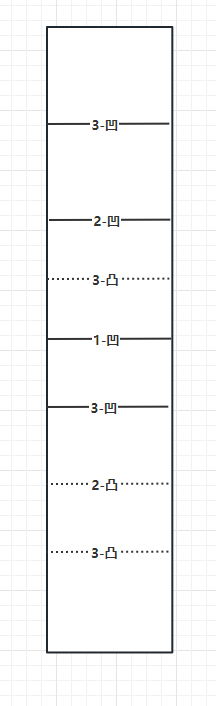
google折纸问题 将一段纸条放在桌上,然后从纸条下边向上方对折1次,压出折痕后展开,此时折痕是凹下去的(称为凹折痕),即折痕凸起的方向指向纸条的背面。如果从纸条的下边向上方连续对折两次,压出折痕后展开,此时有三条折痕,从上到下依次是(凹折痕 -> 凹折痕 -> 凸折痕)。
1 2 3 4 5 6 7 8 9 10 11 12 13 void printAllFolds (int N) printProcess (1 , N, true ); } void printProcess (int i, int N, bool down) if (i > n){ return ; } printProcess (i+1 , N, true ); cout << (down? "凹" : "凸" ) << endl; printProcess (i+1 , N, false ); }